Sunday, November 7, 2010

Cemeteries in Paris


After a break, I am back to show you some views taken last summer at three of the main cemeteries in Paris: Père LachaiseMontmartre and Montparnasse. Each walled urban cemetery offers many interesting walks to take, and amazing things to find. It would be wonderful to explore these places at dusk, or even in the rain. Each has a who's who of notables interred within their confines, some offering maps and signs to find their plots.


It was interesting, especially at Cimetière du Père-Lachaise; officially, cimetière de l'Est, to see tourists with a checklist of graves to find and visit, from Frédéric Chopin and Oscar Wilde to Jim Morrison (below)....


...including Jean Paul Sartre and Simone De Beauvoir....

 
The darker less traveled corners are often the most interesting, with decay and dissolution everywhere.


Even a stone cutter was there to add a name and date to a marker. 

Thursday, September 30, 2010

Digital Death

On May 20th, 2010, it was the first Digital Death Day. A conference was held in California to look at the problems associated with our digital identity once we die. What happens to all of our digital data, internet presence, personal blogs, tweets, etc. once we are gone? Where does it end up? How long does it survive without our continuing on-line presence. A website that addresses many of these questions and more is The Digital Beyond. Here we can read editorials and discussions of how our digital identity will be archived, memorialized, or deleted, depending on the context or site. What about our photos, videos, blog entries? Our PayPal, e-mail, Facebook, MySpace, YouTube, Twitter, Flickr, Second Life, and WorldofWarcraft presences? Does our social networking page survive after our death? Does it continue to send out announcements? Accept comments?


Historically we have always been able to read the journals and diaries of long dead ancestors; but have we made it impossible for our great-grandchildren to read our musings, look at our photographs, or listen to our voices by the obsolescence of an ever-evolving internet? In Life After Death, in Digital Form, Robert Roper discusses these issues at Obit. There are huge philosophical and social questions that arise when we consider our personal on-line documents and who should have access to them. Does our family need to continue getting reminders or e-mails as if we were still sending tweets? Does our Facebook page need to continue accepting posts from friends and sending updates as to our non-activity?

Another article which looks at this issue is BBC News: Virtual Life after Death.

I have no intention of addressing this issue here, as there are many others who have posted more informed views on this topic. But it is never too late to start thinking about what YOU would want done with your links, passwords, accounts, blogs, slide-shows and portfolios, etc.  Why die twice?


Sunday, September 5, 2010

Deathmasks


It was the tradition for many centuries for death masks to be made of monarchs, artists and politicians in the time directly after their demise.

One of the most extensive on-line sites on deathmasks is Undying Faces. Well worth a look.
Here, from that site, is a gerat shot of a death mask in progress...

Death Mask
“New York circa 1908. Making a plaster death mask. View full size. 8×10 glass negative, George Grantham Bain Collection, Library of Congress.” 
Credit for this and many excellent historical photos, visit:
http://www.shorpy.com/node/3430

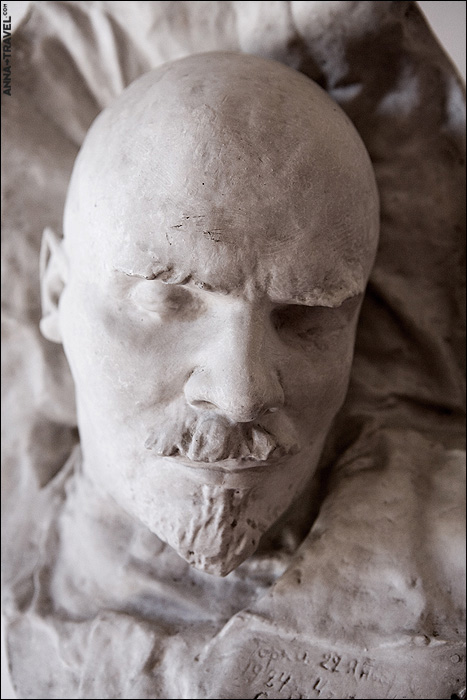
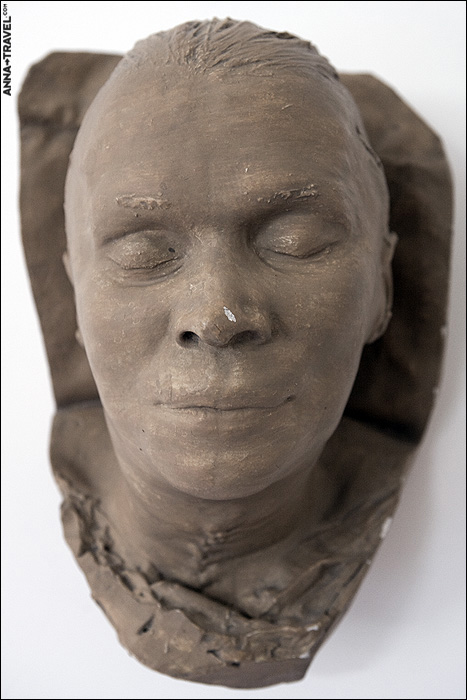
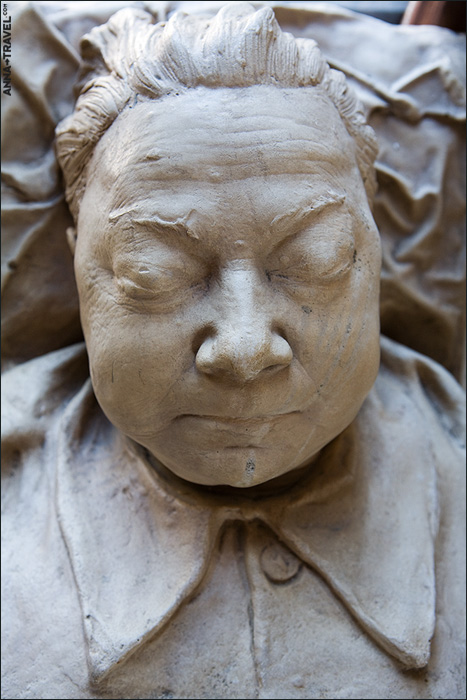
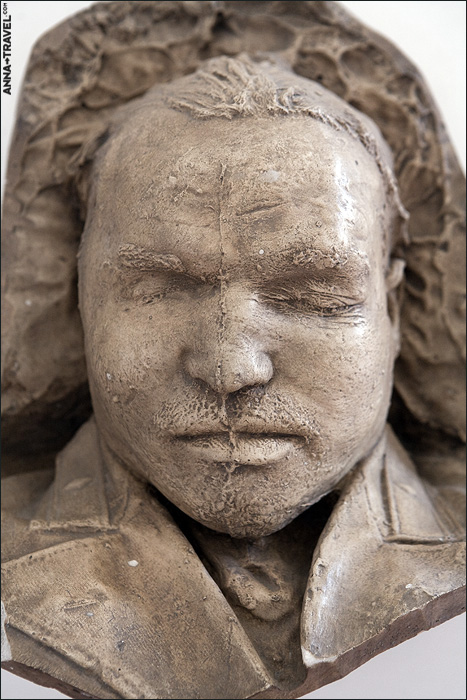
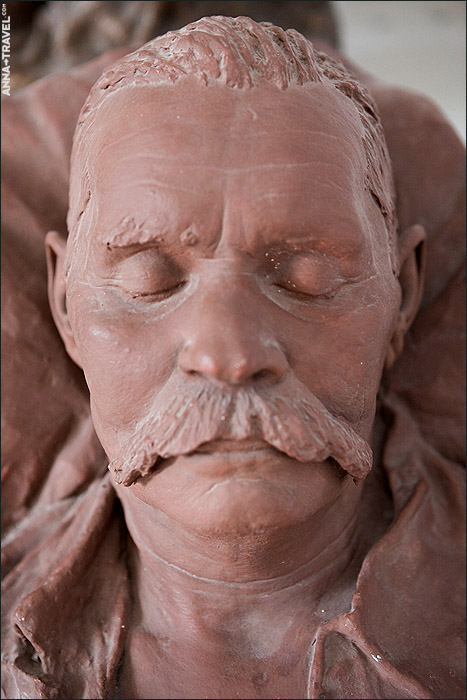
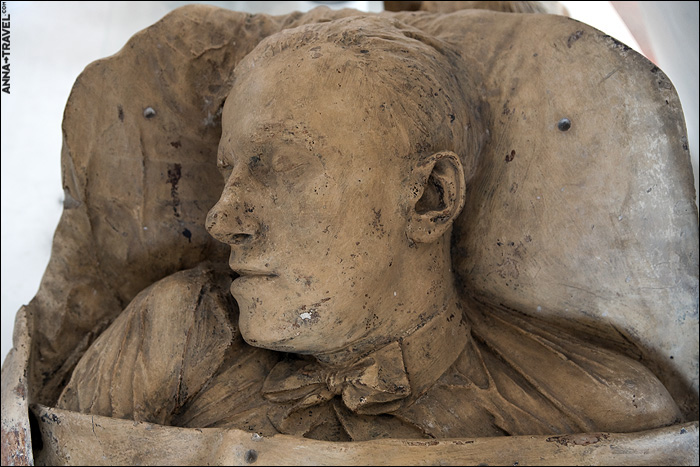
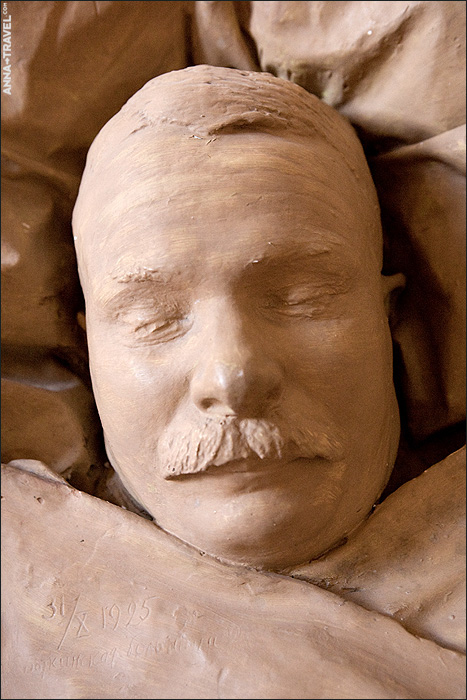
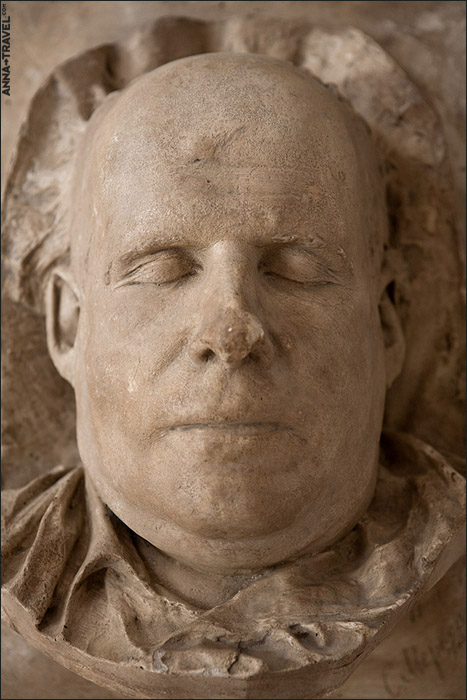
Here are some deathmasks of some famous Soviet personalities by sculptor Sergei Merkulov.

Death Masks of the Famous Soviet People

Above: Vladimir Ilyich Lenin (22 April 1870 – 21 January 1924)


Death Masks of the Famous Soviet People

The sister of Lenin.


Death Masks of the Famous Soviet People

Krupskaya, Lenin’s wife.


Death Masks of the Famous Soviet People

Chkalov, the famous Soviet aviator.


Death Masks of the Famous Soviet People

Gorky, the famous Soviet writer.


Death Masks of the Famous Soviet People

Mayakovsky, the famous Soviet poet.


Death Masks of the Famous Soviet People

Frunze, on of the best Soviet commander-in-chiefs of the civil war (1918—1922).


Death Masks of the Famous Soviet People

Eizeinshtein, the world-wide famous Soviet movie producer.

This YouTube video with music shows many more non-Soviet masks.


Other websites which feature deathmasks include:

Death Masks of the Famous

20 Death Masks Of Famous People

John Dillinger


Saturday, July 31, 2010

Post Mortem Portrait Archive, Part Six

More From My Post-Mortem Portrait Archive:

Once again it is time to present a few more images from my Post Mortem Portrait collection. These are some wonderful examples of amateur, or non-studio portraits. Again, almost all of these portraits are of children, one of the most common forms of this kind of memorial photography. You will see that many are photographed at home or in the family's back yard. Household furniture is often seen as part of the set-up or back-drop. Some even include a family pet hanging around in the background.


The last two subjects are obviously much more recent than the previous twelve, which are circa 19th or early 20th century. The predominance of a professional studio portrait was greatly diminished by the mid-20th century and the number of amateur photographs increased as the practice became more private and less acceptable for a professional photographer or studio to advertise or even do. The improvements in photographic technology also made it easier for family members to photograph their loved ones, especially with the advent of the snapshot camera, then the Polaroid, and now the digital camera. The  body in its casket was no longer being "waked" at home, so the setting is now usually the funeral home or church.

Previous postings on Dark Dissolution that included other images from my Post Mortem Portrait Archive are:  "More Scans....", "Morbid Anatomy", "Sleeping Beauties", "Putting the Fun back....", and "Wisconsin Death Trip".

I will post more later, but with a different emphasis; maybe the props used, the clothing, or the setting....


Tuesday, July 20, 2010

Death Reference Desk - Blog


Death Reference Desk

I came across this amazing reference blog also devoted to DEATH.
It features some great entries and links. It is just over a year old, and very ambitious.
Here's one of thier opening images...my sentiments, exactly.


This summer is c-r-a-z-y, so I apologize for posting this cop-out page, but the Death Reference Desk should easily keep your interest piqued until I get back...

Have a nice summer .... you never know if it will be your last ....  :-)

Sunday, July 4, 2010

How Much is Your Dead Body Worth?


In 1998 Hilary Mantel published a great novel based on the life and times of 18th Century Scottish surgeon John Hunter and his anatomist brother William. Hunter was responsible for the original huge collection of pathological specimens now housed at the Hunterian Museum at the Royal College of Surgeons in London. The surgeon was keen to obtain specimens of any and every physiological wonder he could find. In Mantel’s The Giant, O’Brien, in 1782 we find that Hunter was pursuing the dying 7 foot 7 inch tall Irish giant, Charles O’Brien (Bryne) in order to obtain his skeleton for his collection. He plied the unwilling O’Brien with promises of a cash advance for his eventual corpse. (see his skeleton in the case: photo at right)

The novel is one of my favorites.

This book paints a detailed picture of the intrigue and almost desperation that was prevalent during these times, when medical science was struggling to advance, but access to human cadavers was scarce. It also describes the intrigue and illegal activity that supported the men of medicine in the 18th and 19th centuries. There was a critical shortage of human cadavers for teaching and research before the Anatomy Act of 1832 opened the poorhouse doors to give access to those too poor to afford a proper burial. Until then, the few legal bodies that were available from hanged criminals were not enough for the growing number of anatomy schools. Soon the Resurrection Men were able to fill the void by grave robbing and body snatching for quick cash. William Burke and William Hare didn’t take long to evolve into murderers when they realized how easy it was to cash in by selling cadavers to Dr. Robert Knox, an ambitious Edinburgh anatomist. In 1828, after 16 murders over an 11-month period, they were caught and Burke was hanged AND anatomized. The verb to be burked or burking entered the English language. Director John Landis is about to complete a new film (2010) — Burke and Hare, one of many such films made about them over the years.

I found a recent documentary film about body snatching that is strangely reminiscent of a 1987 episode, Body Banks, of the quirky sci-fi television show Max Headroom. The documentary by the BBC’s Horizon examines the high monetary value of the human remains needed for research, testing, study, and medical transplant and how this results in the illicit trafficking of such remains.

This is all very different from the live organ donations that are much more regulated and controlled by the in-hospital context in which they are harvested. See Organ Donation and Transplantation from the Encyclopedia of Death and Dying website.

BBC/Horizon promotional text for the documentary: How Much is Your Dead Body Worth?

When veteran broadcaster Alistair Cooke died in 2004 few suspected that he was yet to uncover his greatest story. What happened to his body as it lay in a funeral home would reveal a story of modern day grave robbery and helped smash a body-snatching ring that had made millions of dollars by chopping up and selling-off over 1000 bodies. Dead bodies have become big business. Each year millions of people’s lives are improved by the use of tissue from the dead. Bodies are used to supply spare parts, and for surgeons to practice on. Horizon investigates the medical revolution that has created an almost insatiable demand for body parts and uncovers the growing industry and grisly black market that supplies human bodies for a price.

Watch it in its entirety at Top Documentary Films.
How Much Is Your Dead Body Worth?   BBC-UK  49:00 min


***WARNING – Contains Scenes Of Human Dissection and Human Body Parts***
… well worth the watch, though.

Thursday, July 1, 2010

Jack Burman: The Dead

Canadian photographer Jack Burman's long awaited book of post mortem portraits, The Dead, is finally here. The Magenta Foundation (Toronto) has published a fine collection of Burman's amazing photographs in three forms: the hardcover edition, hardcover edition in a wooden box, and the deluxe boxed edition with a signed original print.


Martha Hanna (director of the Canadian Museum of Contemporary Photography) provided a brief introduction, and Robert Enright interviewed Burman for the text. Burman's work spans decades of searching for the humanity of human remains from sites far away from battlefields and streets. He forces us to come face to face with individuals, with the actual dead, not just symbols of the dead. He explores the collections of prepared medical specimens in Latin American and European medical museums.


The wooden box encasing the book is rough, unfinished, except for a transparent gray stain. Its halves fit together tightly, held fast with rare earth magnets, so there is a brief struggle as you attempt to access the book within. The black and white print included in the deluxe edition is small (5.5 inches by 6.5 inches on 10.25 by 7.25 paper) in an edition of 100. It is of a richly detailed, articulated crouching human skeleton entitled Germany #49 (Catatonic Man), 2009.

Although I've seen this kind of subject before (such as in Rosamond Purcell and Stephen Jay Gould's  Finders, Keepers: Eight Collectors), many images were a surprise, both in their elegance and their visceral power. The reproduction quality is excellent in spite of the smallish format of the book it self. The size may actually contribute to its intimacy rather than sensationalize its content. I highly recommend this book for the discerning collector of all things macabre.